
Understanding Your Georgia Police Accident Report
If you’ve been involved in a car accident, your Georgia police accident report can provide valuable information about what happened and may play an important role in your insurance claim or personal injury case. However, these reports often contain abbreviations, codes, diagrams, and technical language that can be difficult to understand.
At The Law Offices of Humberto Izquiero Jr., PC, we help accident victims throughout Georgia interpret police reports, identify important details, and use that information to build strong personal injury claims. Knowing how to read your accident report can help you better understand your case and identify any errors that could affect your claim.
What Is a Georgia Police Accident Report?
A Georgia police accident report is an official document prepared by the law enforcement officer who investigated your collision. The report summarizes the facts surrounding the accident based on the officer’s observations, statements from the drivers and witnesses, and evidence collected at the scene.
While the report is not the final word on who is legally responsible for the accident, insurance companies often use it when evaluating claims, and attorneys rely on it as a starting point for their investigations.
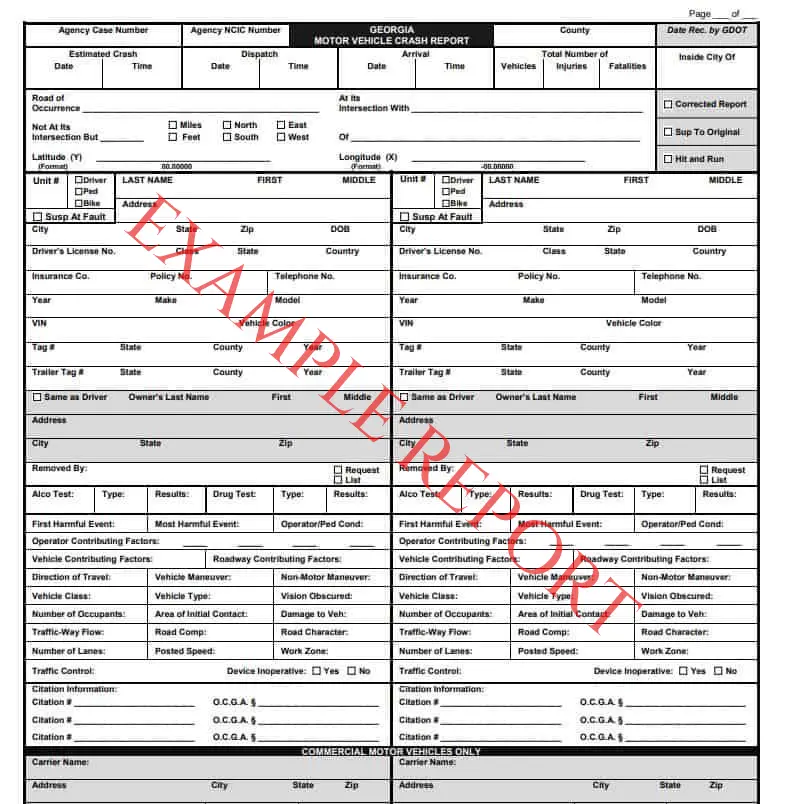
Key Sections of a Georgia Police Accident Report
Basic Accident Information
The first section typically contains general details about the collision, including:
- Date and time of the accident
- Exact location
- County and roadway
- Report number
- Investigating agency
- Reporting officer’s name and badge number
Review this information carefully to make sure it is accurate.
Driver Information
The report will list information for each driver involved in the collision, including:
- Full name
- Address
- Driver’s license information
- Insurance company
- Vehicle owner (if different from the driver)
Verify that your personal information is correct.
Vehicle Information
Each vehicle involved will have its own section that may include:
- Year, make, and model
- License plate number
- Vehicle Identification Number (VIN)
- Registration information
- Damage description
- Towing information
This section helps document the vehicles involved and the extent of the damage.
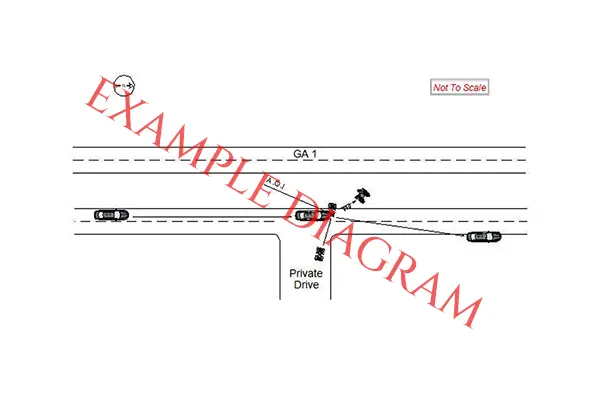
Accident Diagram
Most Georgia police reports include a diagram illustrating how the accident occurred.
The diagram may show:
- Vehicle positions
- Direction of travel
- Lane markings
- Traffic signals or stop signs
- Point of impact
- Road layout
Although the diagram is intended to help explain the collision, it may not always capture every detail of what occurred.
Officer’s Narrative
One of the most important sections of the report is the officer’s narrative.
This written summary often explains:
- What each driver reported
- Witness observations
- Physical evidence at the scene
- Road and weather conditions
- The officer’s observations
- Whether citations were issued
The narrative can provide valuable insight into how the investigating officer believed the collision occurred.
Contributing Factors
Police reports frequently identify factors that may have contributed to the accident, such as:
- Speeding
- Following too closely
- Failure to yield
- Distracted driving
- Improper lane change
- Running a red light
- Driving under the influence
- Weather conditions
These factors help explain the circumstances of the collision but do not automatically determine legal fault.
Injuries
The report will typically indicate whether anyone involved suffered injuries and may describe their apparent severity.
Information may include:
- Visible injuries
- Complaints of pain
- Whether emergency medical services responded
- Whether anyone was transported to the hospital
Some injuries, including soft tissue damage or traumatic brain injuries, may not be immediately apparent after an accident.
Witness Information
If witnesses were present, the report may list:
- Names
- Contact information
- Statements provided at the scene
Independent witness testimony can be extremely valuable when determining how an accident occurred.
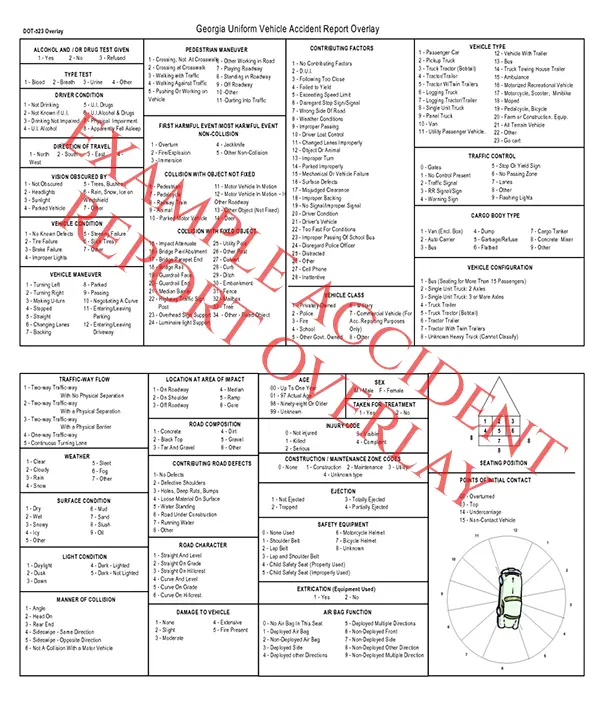
Understanding Common Abbreviations and Codes
Georgia police reports often use abbreviations to save space.
Common examples include:
- V1 – Vehicle 1
- V2 – Vehicle 2
- D1 – Driver 1
- D2 – Driver 2
- N – North
- S – South
- E – East
- W – West
- POV – Private Vehicle
- EMS – Emergency Medical Services
- DOI – Damage Over Impact Area
If you’re unsure what a code or abbreviation means, an experienced attorney can help interpret it.
Does the Police Report Determine Fault?
One of the biggest misconceptions after a car accident is that the police report automatically decides who is at fault.
While the officer may note observations, contributing factors, or issue traffic citations, the report itself does not legally determine liability. Insurance companies, attorneys, and, if necessary, the courts will evaluate all available evidence before making that determination.
Additional evidence may include:
- Photographs
- Surveillance footage
- Dash camera recordings
- Witness testimony
- Vehicle damage
- Medical records
- Expert accident reconstruction
What If Your Police Report Contains Errors?
Mistakes sometimes occur in police reports. Common errors include:
- Misspelled names
- Incorrect addresses
- Wrong insurance information
- Incorrect vehicle descriptions
- Inaccurate accident locations
- Missing witness information
If you notice an error, contact the investigating agency promptly. Some factual mistakes may be corrected or supplemented, depending on the circumstances.
If the error could affect your injury claim, an attorney can help determine the best course of action.
How a Police Report Can Affect Your Injury Claim
A police accident report often serves as one of the first pieces of evidence reviewed by insurance companies. A well-documented report can strengthen your claim by supporting your version of events and identifying key evidence.
However, even if portions of the report are unfavorable, your case is not necessarily lost. Additional evidence may clarify what happened and help establish liability.
An experienced attorney can investigate beyond the police report to build the strongest possible case.
Frequently Asked Questions
Can I challenge information in my Georgia police report?
Yes. If you believe your report contains factual errors, you may be able to request corrections or submit additional information through the investigating agency.
Does a traffic ticket mean the other driver is automatically at fault?
No. A citation may support your claim, but fault is determined by considering all available evidence.
What if the officer’s narrative is inaccurate?
Your attorney can gather additional evidence, interview witnesses, obtain surveillance footage, and work with accident reconstruction experts to challenge inaccurate conclusions.
Will my insurance company use the police report?
Yes. Insurance companies routinely review police reports when investigating accident claims and evaluating liability.
Should I hire an attorney to review my accident report?
If you suffered injuries or significant property damage, having an attorney review your police report can help identify issues, preserve evidence, and protect your legal rights.

Let The Law Offices of Humberto Izquiero Jr., PC Review Your Accident Report
Reading a Georgia police accident report isn’t always straightforward. The legal terminology, diagrams, and coded information can make it difficult to understand how the report may affect your claim.
At The Law Offices of Humberto Izquiero Jr., PC, we help clients review accident reports, investigate collisions, identify additional evidence, and pursue the compensation they deserve. If you’ve been injured in a Georgia car accident, contact our office today for a free consultation. We’ll explain what your police report means, answer your questions, and help you move forward with confidence.

